

How to prepare a Portugal D2 visa business plan
A Portugal D2 application depends on more than a business idea: the plan needs to show how the proposed activity can work in Portugal. The D2 visa is a residence route for entrepreneurs, independent professionals and self-employed applicants, and the Portugal D2 visa business plan requirements include a Portugal-focused market analysis, job-creation plans, financial projections covering at least three years, and an explanation of the business’s local economic benefits. The plan should also connect your experience and resources to a realistic operating strategy.
It’s understandable to wonder whether the D2 route fits a freelance activity as well as a company launch, or how the visa leads to residence. The answer depends on how clearly your proposed work, customers and financial assumptions come together, not on using a generic template. This guide explains who the D2 route can suit, how its residence pathway works and how to organise a focused plan for Portugal. You’ll see what to address in each part, from your professional background and local market to costs, revenue assumptions and the value your activity can bring to the Portuguese economy.
Key Takeaways
- Assess whether your activity is an entrepreneurial or self-employed venture, and make sure the plan explains how it will operate in Portugal.
- Build a Portugal-focused case with evidence of customer demand, a practical approach to job creation and clear local economic benefits.
- Organise your application documents around your business proposal, personal circumstances and the requirements of the consular process.
- Connect each financial projection to a realistic operating strategy, your professional experience and the resources available to launch the activity.
- Keep the plan focused and coherent, whether you intend to register a company or work independently.
What is the Portugal D2 visa?
Common refusal risks include a vague or inconsistent business case, weak evidence of funds, and incomplete documents. Reduce these risks by making the plan specific to Portugal and aligning its financial figures, supporting records, and proposed activities.
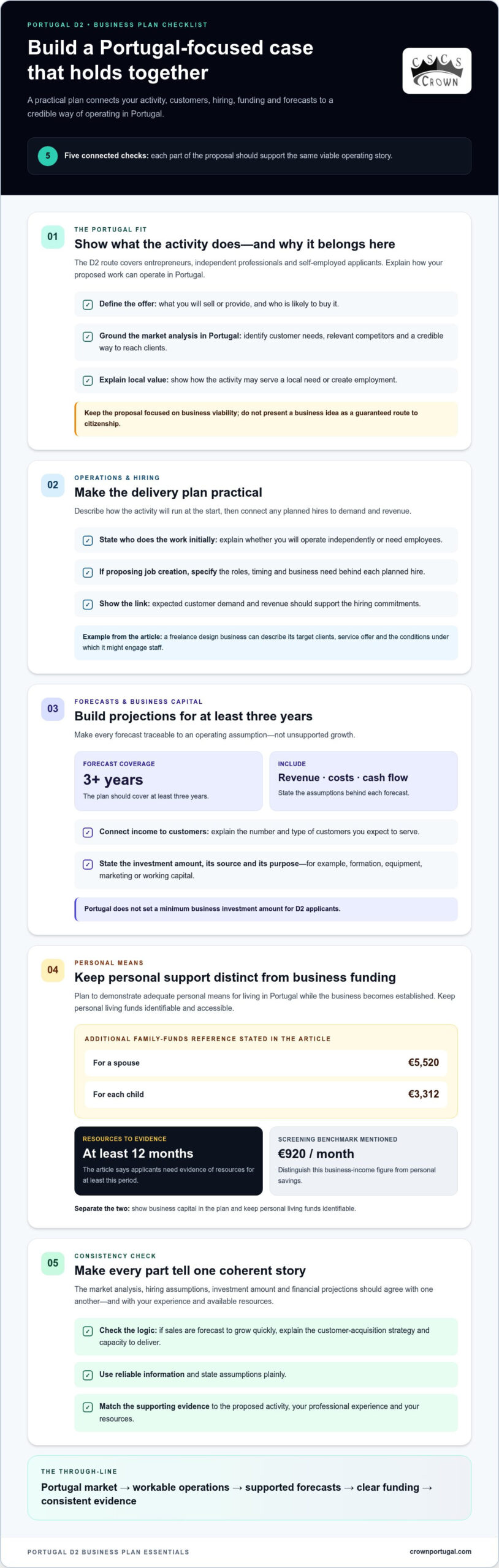
- Define the activity and its Portugal-specific value. The D2 is a residence route for entrepreneurs, independent professionals, and self-employed applicants. Describe what you will sell, who is likely to buy it, and why the activity can operate in Portugal. A market analysis should identify customer needs, relevant competitors, and a credible way to reach clients. Explain the economic benefit, such as serving a local need or creating employment. Do not present a business idea as a guaranteed route to citizenship.
- Set out a practical hiring and operating plan. Explain whether the activity will initially be run by you or require employees. If job creation is part of the proposal, specify the roles, timing, and business need behind each planned hire. Connect those commitments to expected demand and revenue. A freelance design business, for example, could explain its target clients, service offer, and conditions under which it might engage staff.
- Build projections for at least three years. Show expected revenue, operating expenses, cash flow, and the assumptions behind each forecast. Tie income to the number and type of customers you expect to serve, rather than relying on unsupported growth. Portugal does not set a minimum business investment amount for D2 applicants. State the amount you will invest, where it comes from, and how it will fund formation, equipment, marketing, or working capital.
- Separate business financing from personal means. Applicants should plan to demonstrate adequate personal means to support themselves while living in Portugal. The stated additional reference is €5,520 for a spouse and €3,312 for each child. Applicants need evidence of resources for at least 12 months. Keep personal living funds identifiable and accessible while the business becomes established; show business capital separately in the plan. A €920 monthly business-income figure also appears as an eligibility screening benchmark, so distinguish projected business income from personal savings.
- Check that the plan tells one consistent story. Match the market analysis, hiring assumptions, investment amount, and financial projections. For example, a plan forecasting rapid sales should explain its customer acquisition strategy and capacity to deliver. Use reliable information, state assumptions plainly, and ensure each forecast supports the proposed activity. This makes the plan’s viability easier to assess alongside the applicant’s resources and professional experience.
Can a freelancer or self-employed person use the D2?
Yes. Portugal’s D2 route is open to independent professionals and self-employed applicants, as well as entrepreneurs establishing companies. A freelancer should present a clear activity, relevant experience, and a credible way to obtain clients. If all income comes from remote work for foreign clients, the Portugal Digital Nomad D-8 Visa may better fit that work arrangement.
- Describe your independent activity and client base. Explain the service you provide, your professional background, and how you’ll reach customers. For example, a freelance designer can describe their services, intended clients, and project delivery process. Show how the proposed work will operate in Portugal, including any local customer or supplier relationships. Match the description to your qualifications and supporting evidence, so the application presents one consistent account of your work.
- Organise the documents around the application. Prepare the visa form, passport, business plan, financial evidence, accommodation documents, and supporting records. Applicants over age 16 must provide a criminal-record certificate, valid for 90 days before submission. Include documents that support your professional history and proposed activity. Check that names, dates, and descriptions match across the application, business plan, and attachments before submitting them to the consulate handling your case.
- Align accommodation evidence with the consulate’s checklist. Portugal’s Ministry of Foreign Affairs lists an accommodation contract covering the four-month visa duration. Some Portuguese consulates require a rental agreement lasting at least 120 days; others require 12 months. These periods vary by consular checklist. Use the requirements for the place where you submit your application, and make sure the accommodation dates support your intended arrival and stay.
- Plan the visa and residence-permit stages separately. D2 visa processing is estimated at 60 to 90 days, depending on the consulate and document completeness. After approval, the visa is valid for 120 days, allowing the holder to enter Portugal and attend an AIMA appointment. A temporary residence permit granted through this route is valid for two years and may be renewable while the business remains active and compliant. If a spouse or children will accompany you, organise their identity and relationship documents alongside the principal applicant’s file.
D2 visa legal basis and residence permit pathway
- Use the legal basis to frame the application. Portugal’s D2 visa is identified under Article 60 of Lei 23/2007. It is a residence route for people establishing a business or pursuing independent professional activity in Portugal. The proposal should show a credible connection between the applicant’s intended activity and the requested status. Unlike an investment-based route, the D2 has no set minimum investment amount. Explain the amount planned for the venture and how it supports operations, rather than presenting a particular investment figure as a legal threshold.
- Plan the transition from visa to residence permit. An approved D2 visa allows entry to Portugal so the holder can proceed with the residence-permit process through AIMA. A temporary residence permit granted through this route is valid for two years and may be renewable while the business remains active and compliant. AIMA is expected to decide on a complete, compliant residence-permit application within ninety working days. Keep records of business activity, registration, and compliance, since they help demonstrate that the proposed venture continues to operate.
- Include family members in the residence plan. If a spouse or children will join the applicant, account for their applications and supporting documents in the relocation plan. Family members’ residence status is connected to their own application process, so organise identity and relationship records alongside the principal applicant’s file. A coherent timeline should cover arrival, the principal applicant’s AIMA appointment, and the family’s related residence steps. This avoids treating the entrepreneur’s permit as the only administrative task.
- Track residence and absences carefully. Keep a travel record after receiving a Portuguese residence permit. Physical presence and time spent abroad can affect the maintenance of residence status, so plan trips around the applicable permit conditions. Retain travel dates and evidence of ongoing business activity in Portugal. The business plan should also reflect a realistic operating presence, such as client meetings, delivery schedules, or local administration, rather than implying that the applicant will be absent for extended periods.
- Understand longer-term options without treating them as automatic. D2 residents may apply for permanent residence after maintaining valid residence status continuously for five years. Portuguese citizenship is a separate pathway, with eligibility dependent on meeting the relevant requirements. These outcomes are not the same as renewing a temporary permit. Keep residence records and evidence of compliance from the outset, then assess each application stage against the rules that apply when you become eligible.
How long should a D2 business plan be?
A focused D2 business plan is commonly recommended at 15-25 pages, rather than a padded 60-page template. Use that range as a practical guide, not a substitute for clear evidence. The plan’s length should reflect the activity, its operating model, and the supporting information needed to explain its viability.
- Choose the business format before drafting registration details. A D2 applicant can propose a company or a self-employed activity. Describe the intended format and explain how it fits your services, qualifications, customers, and operating responsibilities. Incorporating a company before applying can provide evidence of concrete intent, but registration alone does not demonstrate genuine activity. Set out what you will do after formation, who will buy your services, and how the business will operate in Portugal.
- Match the registered activity to the work you will perform. Choose a company name and describe the proposed activity consistently across the plan and registration documents. Identify the relevant CAE classification for the actual services, rather than selecting a category merely because it sounds broad. For example, a consultant should describe the consultancy work, expected clients, and delivery model. Identify any licensing or qualification requirements relevant to that activity, then explain how your experience supports the proposed work.
- Explain the structure, capital, and incorporation budget. Compare the company structure with the intended ownership and operating model. A Portuguese public limited company, Sociedade Anónima (SA), requires minimum share capital of €50,000. Do not imply that this figure is a D2 visa minimum investment; Portugal sets no minimum business investment amount for D2 applicants. For another structure, state the capital you intend to contribute and itemise formation expenses, equipment, premises, and working funds. Base each amount on the planned activity and explain its source.
- Make the page count serve the consular assessment. Use the 15-25-page recommendation to organise evidence, not to fill space. A concise plan can still include an executive summary, market analysis, operating model, hiring approach, and financial projections. Add registration records where available and explain how the proposed activity will begin. If a spouse or other dependent will accompany you, keep their personal relocation evidence separate from the company’s formation costs. The consulate should be able to follow the proposal from your qualifications to the business’s practical operations.
What to include in a Portugal-specific D2 business plan
- Explain the business purpose and your Portugal connection. Start with a concise description of the activity, the problem it addresses, and why you intend to establish it in Portugal. Identify the customers you plan to serve and how they will find your services. For example, a language tutor could describe the audience, lesson format, and routes to reaching learners in Portugal. Link the purpose to your professional background, qualifications, and migration plans.
- Support market claims with practical evidence. Define your target customers, their likely needs, and the alternatives they may use. Distinguish confirmed enquiries or prospective clients from general assumptions. A consultant, for example, could explain how their expertise meets a specific business need and how they will approach potential customers. Use reliable information and explain what it means for the proposed activity. Avoid broad claims about Portugal’s economy without connecting them to your actual service.
- Show how the business will operate and contribute locally. Set out the services, delivery process, suppliers, and resources needed to begin. Explain whether you will work independently or plan to create jobs, and connect any proposed roles to workload and revenue. If the activity depends on local partnerships, describe their practical purpose. For founders developing sustainable or impact-focused ventures, studying how venture builders like greenovations.co.za develop green-economy businesses can offer practical insights into structuring a viable commercial model. A plan should demonstrate a credible operating strategy, not merely an intention to register a business or submit an application.
- Make the financial model traceable. Prepare projections covering at least the first three years, with revenue, expenses, cash flow, and stated assumptions. Explain how you estimated customer numbers, service prices, and operating costs. Separate personal living resources from money allocated to the business, and identify the source of business funds. For example, show how initial capital supports equipment and marketing before customer receipts cover recurring expenses. Keep every projection consistent with the market and staffing plans.
- Connect evidence to the application without confusing documents. Organise the business plan and supporting records so each claim can be followed. Include relevant experience, qualifications, company or self-employed activity details, and evidence supporting financial assumptions. A criminal-record certificate belongs among application documents, not as proof of commercial viability. Cross-check names, dates, activity descriptions, and financial figures across the plan and supporting documents before submission. A clear, Portugal-specific account should make the business purpose and execution understandable.
For help preparing an entrepreneur visa application around your Portugal business proposal, get support with your D2 application.
Crown Portugal: Portugal Digital Nomad D-8 Visa
Crown Portugal supports entrepreneurs applying through the Portugal D-2 visa pathway and helps applicants consider which residence route fits their circumstances. If your proposed activity involves building a business in Portugal, support with the D-2 process can help you organise the application around your business plan and supporting documents. If your income comes from remote work for foreign clients, the Portugal Digital Nomad D-8 Visa may be a more relevant route to explore. Crown Portugal also assists with the Portugal Passive Income D-7 visa, Portugal Golden Visa D-9, and NIF Registration (Personal Tax Number). The appropriate option depends on the purpose of your move and the basis of your application. Contact Crown Portugal or visit crownportugal.com to discuss your next step.
Turn your business proposal into a clear next step
Before preparing your application, treat the Portugal D2 visa business plan requirements as a framework for testing whether your proposal, evidence, and intended activity tell one consistent story. Identify any assumptions that still need support, then organise the documents that explain your professional background, business model, and financial plans. This final review can help you spot gaps before submission and make the next administrative steps easier to manage.
Crown Portugal assists entrepreneurs with D-2 visa applications. It also offers Portugal Golden Visa D-9 and NIF Registration (Personal Tax Number). If your plans are taking shape and you want to discuss the D2 pathway, contact Crown Portugal about your D2 visa. A well-prepared plan gives you a practical foundation for moving forward with clarity.
Frequently Asked Questions
Who is eligible for a D2 visa?
Entrepreneurs, independent professionals, and self-employed people proposing activity in Portugal can use the D2 route. A company founder isn’t the only possible applicant. A freelancer should explain their services, intended clients, and relevant experience, showing how these support the proposed activity. If income comes entirely from remote work for foreign clients, compare the D2 with Portugal’s D8 digital nomad route, which may better match that working arrangement.
Are there any investment amount thresholds for the D2 visa?
Portugal sets no minimum business investment amount for D2 applicants. The amount you plan to invest should still make sense for the activity: a consultancy may need different startup resources from a business buying equipment or maintaining premises. Explain the source and intended use of funds, and distinguish business financing from personal living resources. The purpose is to show how the venture can begin and cover its operating needs.
Do I need to register the company before I apply for the D2?
No, forming a company before applying isn’t a universal prerequisite, and the D2 route also covers self-employed professionals. Incorporation can help demonstrate concrete intent, but registration alone doesn’t show that the business is viable or active. If you apply before incorporation, explain the steps you intend to take after arrival. If you have already registered, make sure the company’s activity matches the proposal in your application.
How can I set up a company in Portugal?
Start by choosing a structure and defining the company’s activity, ownership, and operating model. Prepare its articles of association and submit them to the Portuguese Commercial Registry as part of registration. Identify the appropriate CAE activity classification, then account for any licensing or qualification requirements relevant to the work. For example, a consultancy should ensure its registered activity matches the services described in its business plan and customer offer. Similarly, just as international founders expanding into other regions might partner with regional specialists like company formation consultants Oman to manage local corporate registration, establishing a business in Portugal requires exact alignment between statutory filings and intended commercial activity.
How long does the D2 visa last?
The D2 entry visa is valid for 120 days. During that period, the holder enters Portugal and attends the AIMA appointment for the residence-permit process. The temporary residence permit granted through the D2 route is valid for two years and may be renewable while the business remains active and compliant. Keep the visa and residence permit distinct in your plans: they cover different stages of the move.
How long does the D2 visa process take?
Visa processing is estimated at 60 to 90 days, depending on the consulate and whether the application documents are complete. This estimate concerns visa processing, not every step involved in preparing a business plan, arranging documents, or completing the later residence-permit process in Portugal. Build time into your plans for gathering supporting records, and ensure that the business proposal and application documents describe the same activity.
What are the Portugal D2 visa business plan requirements?
The plan should explain the proposed activity in Portugal and support its viability with market analysis, an operating strategy, and realistic financial projections. Address whether the business could create jobs and describe its potential local economic benefits. Include your relevant experience and show how your resources support the proposal. Consistency is key: customer assumptions, planned activity, expected costs, and projections should all describe the same business.
What information and financial projections must a Portugal D2 visa business plan include?
Include the business model, target customers, delivery approach, professional background, and assumptions behind expected sales. Financial projections should cover at least the first three years and show anticipated revenue, expenses, and cash flow. Explain how customer demand supports those estimates and identify likely pressure points, such as slow client acquisition or seasonal sales. Useful projections connect each forecast to a practical action rather than relying on unexplained growth.