

Up-to-date overview of the latest immigration news in Portugal
𝐃𝐚𝐭𝐞: 26 December 2025
AIMA Criticized for Failing to Meet Objectives
Summary:
Two years after its creation, major political parties agree that the Agency for Integration, Migration and Asylum (AIMA) has failed to achieve its goals due to structural issues, backlog inheritance from SEF, and poor resource allocation. Opposition parties argue the agency is not effective in processing migration and asylum cases

A Quarter of Foreign Residents in Poverty
Summary:
A new demographic report suggests that nearly 29% of immigrants in Portugal live in poverty or social exclusion, significantly higher than the Portuguese national average (19.2%). Analysis highlights disparities in employment, income, and access to services.

Over 9,000 Foreigners Notified to Leave Portugal
Summary:
More than 9,000 foreign nationals were notified to leave Portugal in the first half of 2025, reflecting continued enforcement of immigration rules. This includes refusals of residency or failure to regularize status

Parliament Approves Limits on Residency Certificates
Summary:
The Portuguese Parliament approved a proposal granting local parish councils the power to limit the number of resident certificates (atestado de residência) that can be issued to foreign nationals per property. This aims to control local registration but raises concerns among immigrant advocate

Immigrant Population Growth Confirmed
Summary:
Recent official statistics confirm that Portugal has over 1.5 million immigrants, most of whom are of working age. This reflects sustained growth in the immigrant population in recent years

Notable Immigration Trends & Updates (Context for 2025)
AIMA and Administrative Backlogs
Portugal’s immigration system has faced persistent backlogs and administrative challenges since the SEF was replaced by AIMA. The volume of pending cases and complaints illustrates ongoing operational stress

Rejection and Departure Notices Increasing
Reports indicate high rejection rates and a large number of applicants being asked to present missing documents — sometimes resulting in departure notices issued

Demographic Data Challenges
Portugal’s National Statistics Institute (INE) has halted recent immigration data releases due to discrepancies and delays in administrative data from AIMA, affecting planning and policy

Policy Shifts and Legislative Changes
Parliament approved strengthened restrictions on residency rights and family reunification eligibility, especially tightening criteria for job search visas and duration of stay before family members can join

Portugal Immigration Update – December 2025
Comprehensive Summary of the Current Immigration Situation
As of 26 December 2025, Portugal’s immigration landscape continues to undergo significant changes, marked by administrative challenges, stricter enforcement, and growing political and social debate. While the country remains an important destination for foreign workers and families, recent developments show a system under strain.
AIMA Under Pressure
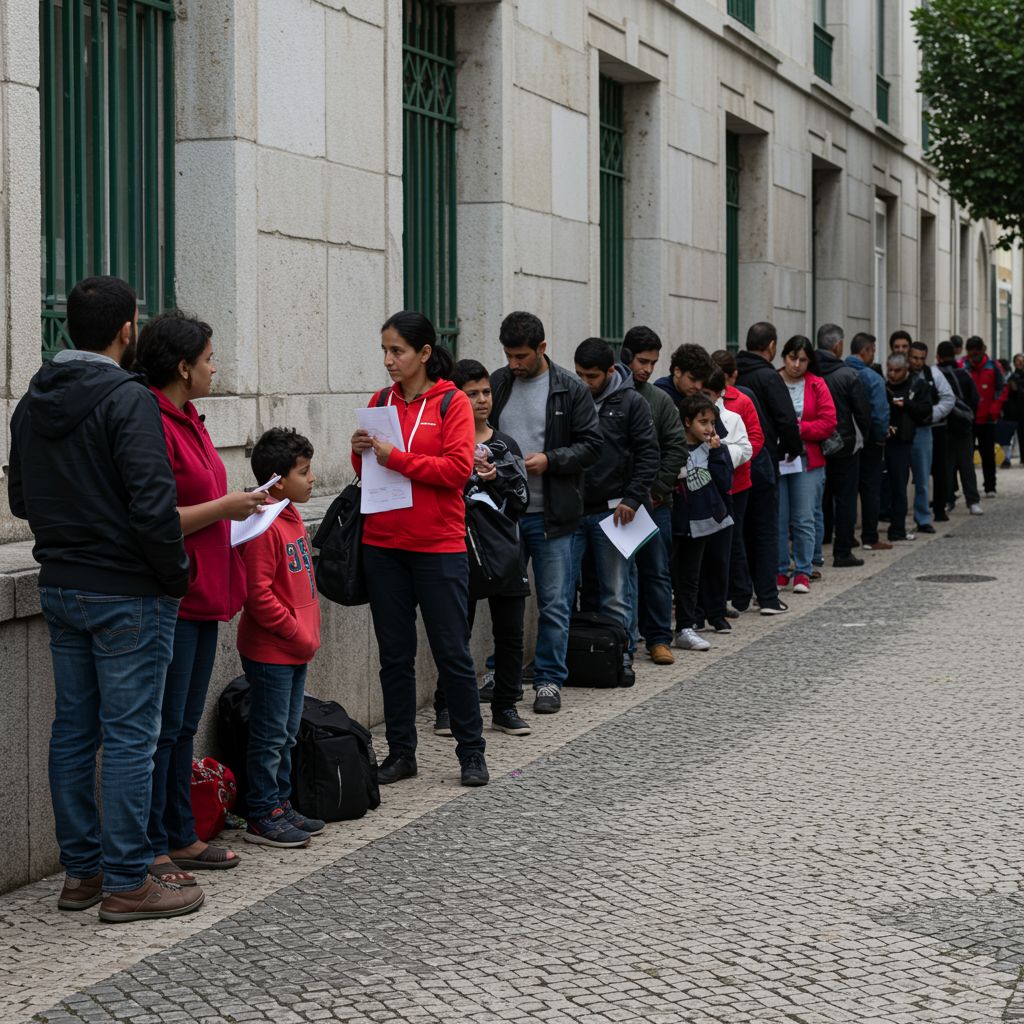
The Agency for Integration, Migration and Asylum (AIMA), which replaced SEF, has faced widespread criticism for failing to meet its operational targets. Political parties across the spectrum acknowledge persistent processing backlogs, delays in residence permit decisions, and inefficiencies inherited from the previous system. Thousands of applications remain pending, leading to uncertainty for immigrants who have been living and working legally in Portugal.
Increase in Rejections and Departure Notifications
In 2025 alone, over 9,000 foreign nationals were notified to leave Portugal, primarily due to rejected residence applications, unresolved documentation (“faltas”), or failure to regularize status in time. Many applicants report receiving decisions after long waiting periods, sometimes without clear communication, intensifying legal disputes and court cases against AIMA.
Legal Challenges and Court Decisions
Portuguese administrative courts continue to play a crucial role. Several rulings have declared AIMA decisions legally non-existent due to procedural violations, ordering authorities to reopen cases and comply with administrative law and SIS (Schengen Information System) regulations. However, courts generally do not grant residence permits directly, instead obliging AIMA to reassess applications lawfully.
SIS Alerts and Cross-Border Issues
Many rejections involve SIS alerts originating from other Schengen states. Courts have emphasized that AIMA must follow proper consultation procedures under EU law before refusing residence permits. Applicants affected by outdated or unresolved SIS alerts are increasingly pursuing judicial remedies.
New Restrictions on Residency Certificates
Parliament approved legislation allowing local parish councils (Juntas de Freguesia) to limit the number of residency certificates issued per property. The measure aims to prevent overcrowding and fraudulent registrations but has raised concerns about access to legal documentation for genuine residents.
Social and Economic Concerns
Recent reports indicate that nearly one-quarter of immigrants in Portugal live at risk of poverty or social exclusion, a rate significantly higher than the national average. Rising housing costs, unstable employment, and delayed legal status contribute to these challenges.
Data and Transparency Issues
Portugal’s statistics authority has acknowledged gaps and delays in immigration data, partly due to AIMA’s administrative difficulties. This has affected national planning, social policy, and public transparency regarding migration trends.
Overall Outlook
Portugal remains a key destination for immigrants, with more than 1.5 million foreign residents, mostly of working age. However, the current environment is characterized by:
- Longer processing times
- Increased refusals and “falta” requests
- Stronger enforcement of immigration rules
- Growing reliance on courts to correct administrative errors
Immigrants and legal practitioners are advised to maintain complete documentation, proof of residence, and legal representation where necessary, as compliance and procedural accuracy are now more critical than ever.
