

Portugal Set to Tighten Immigration Rules Amid Political Pressure

Family Reunification to Remain Untouched, Says PM
In a pivotal move reflecting growing political pressure and shifting public sentiment, Portugal’s Prime Minister Luís Montenegro announced this week that the government plans to tighten immigration rules,
will not suspend family reunification rights..

Speaking at a press conference in Lisbon, Montenegro reaffirmed the government’s commitment to reforming Portugal’s immigration framework.
“It is necessary to tighten the rules that regulate immigration,” he stated, noting that these changes aim to improve border management and ensure the country’s systems are not overwhelmed.
The proposed reforms will not affect the constitutional right to family reunification, the Prime Minister clarified, seeking to distance his administration from more extreme proposals being floated by the far-right Chega party
Chega, now Portugal’s third-largest political force, has gained significant ground following the recent elections, where it secured 60 seats in Parliament.
The party has campaigned aggressively on immigration, calling for harsher policies and even large-scale deportations.
While the Prime Minister stopped short of embracing Chega’s rhetoric, he issued a direct challenge to the party: to support the government’s efforts to create a Foreigners and Borders Unit within the PSP (Public Security Police).
Prime Minister Luís Montenegro:
- “Portugal must be a country of opportunity, but it must also have order and rules. That balance is what we seek to restore.”

This proposed unit would take over many of the functions previously held by SEF (Serviço de Estrangeiros e Fronteiras), which was formally dismantled in 2023. The replacement agency, AIMA (Agência para a Imigração e Mobilidade), has struggled under the weight of massive application backlogs and bureaucratic hurdles, creating frustration among migrants, legal professionals, and businesses alike.
Analysts say the government is walking a fine line—balancing a need for stronger immigration controls while maintaining Portugal’s reputation as an inclusive, migrant-friendly country. “Montenegro is under pressure to respond to the public’s concerns without veering into populist territory,” said political analyst Joana Freitas.
If enacted, these reforms will likely impact new residency applications, employment-based permits, and nationality acquisition timelines, though exact details have yet to be published.
For now, the government appears poised to reinforce its immigration stance without entirely closing the door.
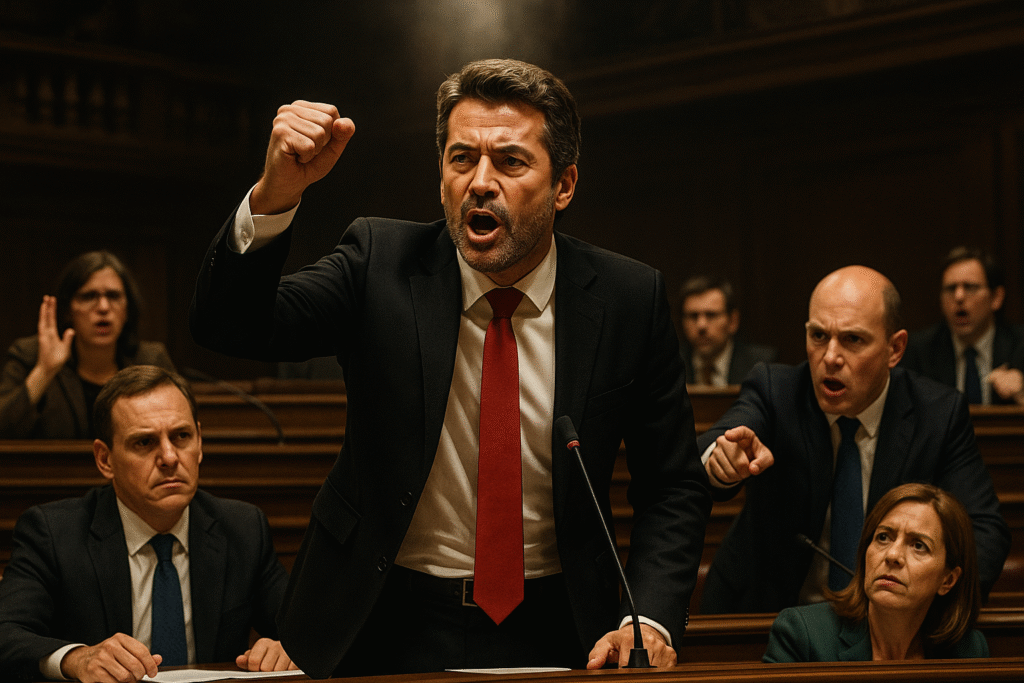
Quote from Chega Party Leader André Ventura:
- “The government is finally recognizing what we’ve been saying for years: uncontrolled immigration is a national threat. But family reunification must also be re-examined.”